Investigation · Cardiovascular Research
Six years of blood pressure pills. Four points. And his doctor asked if he’d been cheating.
He hadn’t eaten salt since 2019. A 2024 analysis of 257 human arteries finally showed what was actually holding his number up — and why nothing in the pharmacy reaches it.
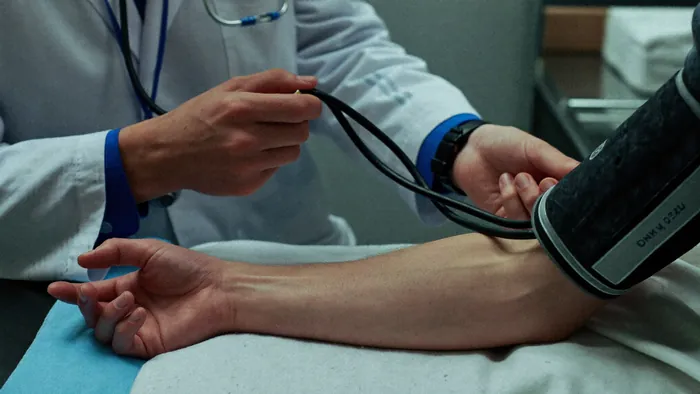
On a Tuesday morning in March, Robert Hendricks sat down at his kitchen table in Dayton, Ohio and did what he has done every Tuesday for six years. He rolled up his left sleeve, wrapped the cuff, pressed the button, and waited for the machine to stop squeezing.
158 over 96.
He wrote it in the notebook he keeps in the drawer, on a page that looks almost exactly like every page before it. Six years of Tuesdays. Six years of numbers that refuse to move.

Robert is 67. A retired maintenance supervisor, two daughters, four grandchildren. He was diagnosed in 2019 and he has done, in order: the DASH diet for eleven months, a $200 monitor his son-in-law recommended, the salt substitute that tastes like metal, beetroot capsules, hibiscus tea, magnesium, a forty-minute walk every single morning including the mornings his knee hurts.
Then amlodipine. Then, last spring, a second medication added to the first.
Six years. Not one of those things moved the number more than four points.
At his appointment in February, the physician looked at the chart, then at Robert, and asked — kindly, the way you ask something you have already decided the answer to — whether he had been staying honest about the diet.
Robert did not argue. He said he would try harder, thanked him, and drove home. He sat in the driveway for a while before going inside, because his wife would ask how it went and he did not have an answer that would not worry her.
He is 67 years old and he had just been called a liar about the one thing he had been disciplined about for six years.

Robert was telling the truth. The problem was never his discipline. The problem is that the thing pushing his blood pressure up was never what his medication was built to treat — and in March 2024, a team of Italian researchers published the photographs that show why.
What the researchers pulled out of 257 arteries
The study was straightforward in design. Surgeons removed plaque from the carotid arteries of 257 patients. Instead of the usual analysis, the samples were sent for a different kind of examination.
In the majority of them, researchers found microscopic fragments of plastic.
Not near the artery. Not in the surrounding tissue. Embedded in the material that was blocking the vessel.
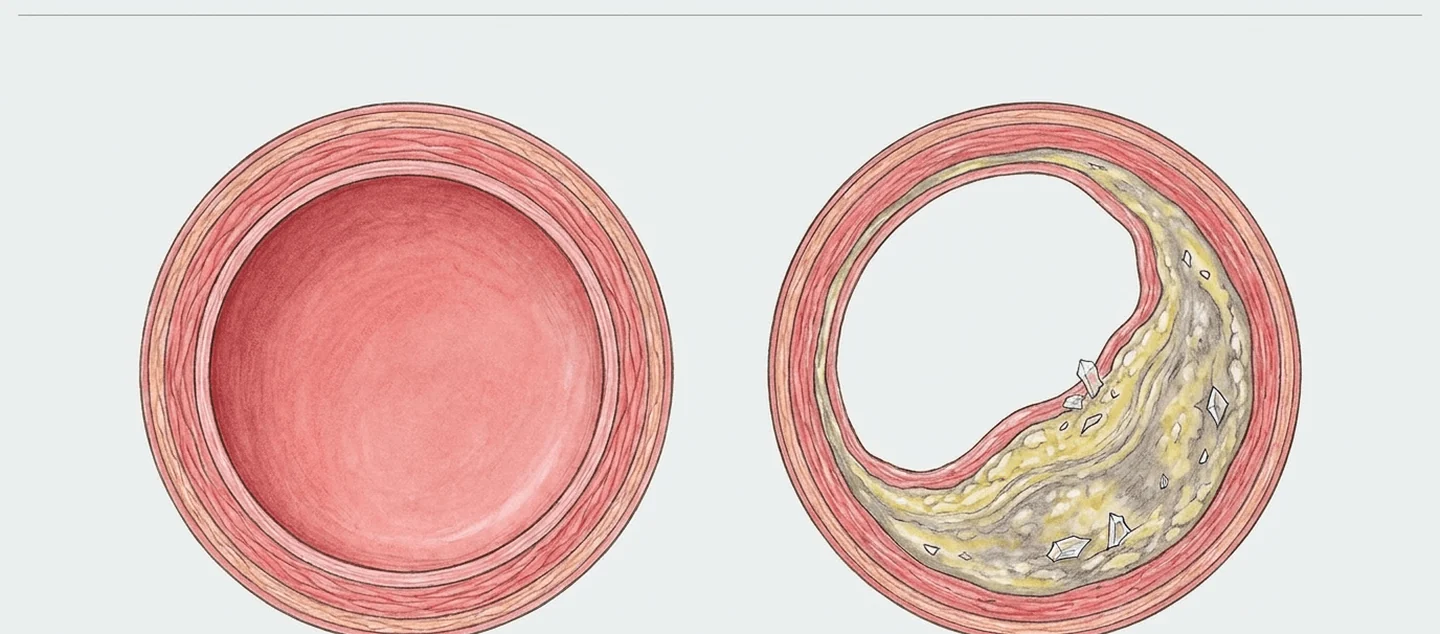
How a plastic particle becomes a blocked artery
The mechanism is uncomfortable precisely because it is so ordinary. Nothing about it requires bad habits.
The particles arrive, constantly
Through drinking water, food packaging, and the air — including dust from tyres and fibres shed by synthetic clothing in the wash. They are small enough to cross the barriers that stop almost everything else.
They cut the artery wall, with every heartbeat
Rigid and irregular, they scrape the smooth inner lining as they pass. The body responds the only way it knows how to respond to a wound: it produces fibrin, the protein that forms a scab.
The repair never switches off
Because the cutting never stops, neither does the fibrin. It layers over itself, catches circulating calcium and fat, and hardens. The channel narrows. Your heart pushes harder to move blood through it — and that extra force is the number on the monitor.
Which brings us back to the two bottles in Robert’s cabinet.
For six years he had been fighting the wrong thing. Not because he was careless — because nobody had told him there was anything else to fight.
Amlodipine works. It genuinely does what it was designed to do: it relaxes the vessel wall so the channel opens wider. The reading comes down. Everyone is satisfied.
But it widens a pipe that is still closing underneath. The deposit is not touched. It keeps thickening, month after month, and the artery keeps narrowing behind the relaxation — which is why the dose has to be raised, and why a second medication eventually joins the first.
The number improving is not the same as the problem improving. That is the entire distinction, and almost nobody is told about it.
What happens if nothing removes it
The deposit does not hold at its current size. Every heartbeat delivers more particles. Every particle opens another tear. Every tear calls for more fibrin. The wall thickens quietly, month after month, and there is nothing to feel while it happens.
Then one of two things occurs, and which one depends only on which artery closes first.
If it is an artery in the brain, half the body stops answering. Speech goes first. Survivors often spend the years they have left in a bed, needing help to reach the bathroom, fully aware of every minute of it.
If it is an artery in the heart, there is no warning at all. No phone call. No last conversation with anyone.
Roughly six million Americans a year die from what this condition sets in motion — more than lung, breast and prostate cancer combined. Almost none of them felt it coming, because there is nothing to feel until the channel closes.
Three questions researchers use to estimate deposit load
Answer honestly. Nothing is recorded and there is nothing to submit.
- Do you get a dull pressure at the back of the neck that painkillers do not touch — usually worst in the morning?
- Have you felt tightness in the chest while resting, or woken at night with your heart pounding for no reason?
- Do your readings vary widely with no explanation — 128 over 82 one morning, 158 over 98 that evening, same routine, same dose?
Why beetroot, hibiscus and magnesium fall short
Robert had tried three of the five things on this list. He wants it on record that he did not expect much from any of them, and that he took them anyway, every day, for months.
Nearly everyone reading this has tried at least one of them. Beet powder. Hibiscus tea. Magnesium. Hawthorn. CoQ10. Some see a modest dip for a week or two. Most watch the monitor drift back to exactly where it was.
There is a reason, and it has nothing to do with those compounds being natural. It has to do with which half of the problem they address.
They act on vessel tone. They do not touch the deposit. Beetroot raises nitric oxide, which relaxes the artery wall — genuinely useful, and the same lever most prescriptions pull. But relaxing a narrowed channel is not the same as clearing it. Stop, and the vessel returns to its true diameter, because the obstruction was never addressed.
It is the difference between loosening the belt and losing the weight.
Every compound on that list, and every prescription in the cabinet, pulls the same lever. The question was never “natural or pharmaceutical.” It was whether anything at all breaks down fibrin and calcium, and intercepts the particles that keep rebuilding the deposit.
For a long time the answer was no. It is no longer no.
Where the answer came from
Once the deposit was understood, the question changed. Researchers stopped asking how to relax arteries and started asking something different: is there a population that simply does not accumulate this?
There is one. A single region, studied for decades, where high blood pressure occurs at a small fraction of the American rate — among people who eat aged cheese, cured meat, and drink wine with dinner.
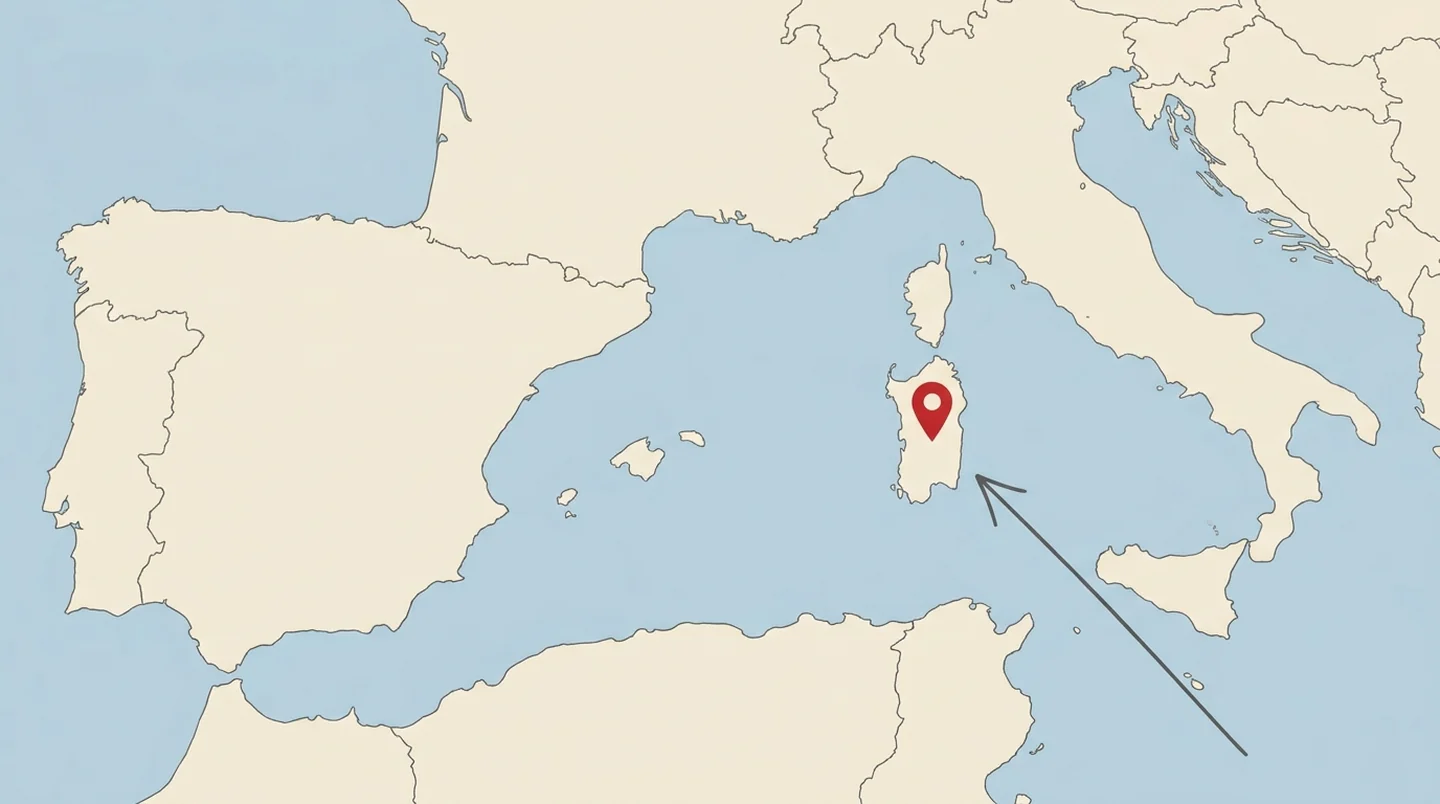
When blood from the oldest residents was analysed, the deposit described above was largely absent. Not reduced. Absent.
It is not their genes. It is something they consume, and have consumed for centuries — produced only a few months a year, in one place, containing a compound that exists at meaningful concentration almost nowhere else on earth.
The presentation includes follow-up readings from the trial groups. Two of them:
“My cardiologist ran the panel twice. He asked what I had changed. I told him and he wrote it down.”
“First morning in four years I woke up without that pressure at the back of my neck. I sat there for a minute trying to work out what was different.”
*Individual results vary. Names and identifying details have been changed.
Several public figures have spoken about using it — among them a musician in his eighties who says he came off two prescriptions before a touring schedule, and a broadcaster who described his readings settling within a week.

As for Robert
He still keeps the notebook. It is the same one, the same drawer, the same Tuesday morning routine.
The pages look different now.
The first month, almost nothing — three or four points, which he assumed was the machine. By week seven it read 141 over 88, and he took it twice more to be sure. In April his physician ran the panel a second time before saying anything, then asked what had changed. Robert told him. The doctor wrote it down.

He is still on one of the two medications, at his doctor’s direction, and he is not in a hurry about it. What he wanted was not to be free of the pill. What he wanted was for the number to mean something.
The deposit does not pause while anyone decides. It is thickening today the same as yesterday, and the only question worth asking is how much wall is left by the time it gets dealt with.
Have a pen ready. The compound is named roughly seven minutes in, and it is not something you will find by searching for it afterwards.
Robert, Margaret and Dennis all watched the same presentation. The region, the compound and the full protocol are named inside it.
▶ Watch it while it is still up No credit card · no email required · 12 minutesQuestions readers are asking
Is this the same thing people are posting about online?
Not quite. Most versions circulating leave out the second and third components, which is where the actual mechanism sits. The physician explains the difference early in the presentation.
Do I need to stop my medication?
No — and you should not stop or change any prescription without speaking to the doctor who wrote it. Most people in the trial groups continued their existing protocol throughout.
How quickly do readings change?
Reported timelines vary. Some describe movement inside the first two weeks; others took longer. The presentation shows the full progression from the trial groups, week by week.
Why have I never heard of this compound?
It is produced in one region, for a few months a year, and has no patent value — which the physician argues is precisely why it was never developed. He covers that history at about the eleven-minute mark.
Who is the physician in the presentation?
A neurosurgeon and medical correspondent whose face you will almost certainly recognise from national television. He identifies himself in the opening minute.